
Bible Belt Paradox: Why Conservative States Top U.S. Divorce Rates by State
Imagine a region where church steeples pierce the sky, Sunday sermons echo with vows of lifelong fidelity, and marriage is hailed as a sacred covenant. Yet, in these very heartlands of American conservatism—the Bible Belt—divorce rates by state climb higher than almost anywhere else. This striking contradiction, known as the Bible Belt paradox, challenges our assumptions about faith, family, and regional divorce trends. Drawing from U.S. Census Bureau data and studies from institutions like the University of Texas and University of Iowa, let's unravel why conservative strongholds lead the nation in marriage statistics US that end in dissolution.
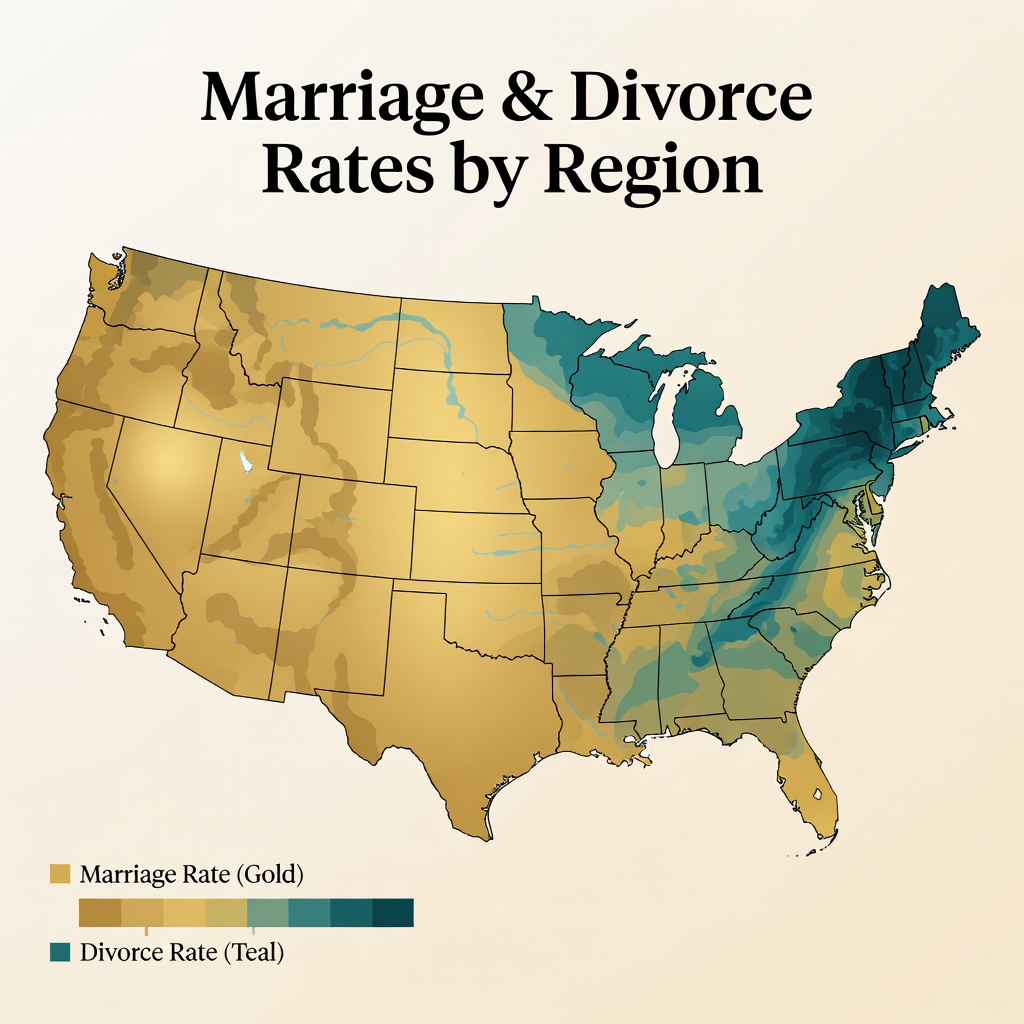
At first glance, it defies logic. States like Arkansas, Oklahoma, and Alabama preach marital permanence from pulpits across the South. But the numbers tell a different story: according to the latest Census Bureau figures, Arkansas boasts a divorce rate of about 10.7 per 1,000 people, Oklahoma hovers around 10.9, and Louisiana isn't far behind at 9.2. Compare that to the Northeast's bastions of stability—MASSACHUSETTS at a mere 5.3 and New Jersey at 5.9—and the paradox sharpens into focus.
Mapping Divorce Rates by State: The Southern Surge
U.S. marriage statistics US reveal stark regional divorce trends. The Bible Belt, stretching from Texas through the Deep South to parts of the Midwest, consistently tops the charts. Census Bureau analyses from 2021 show that nine of the ten states with the highest divorce rates are in the South or Southwest: Arkansas, Oklahoma, Nevada (an outlier), Alabama, Kentucky, Wyoming, Idaho, Tennessee, and South Carolina.
Why Nevada spikes high despite its glitzy wedding chapels? Quickie marriages fuel hasty divorces, but even excluding it, the Southern pattern holds. Meanwhile, the Northeast shines with restraint: Vermont, Massachusetts, and Connecticut report rates below 6 per 1,000. These contrasts aren't fleeting; they've persisted for decades, as tracked in longitudinal studies.
- Highest Divorce Rates: Arkansas (10.7), Oklahoma (10.9), Alabama (9.5)
- Lowest Divorce Rates: Massachusetts (5.3), New Jersey (5.9), New York (6.1)
- Source: CDC/NCHS and Census Bureau refined rates, adjusted for population.
Unpacking the Bible Belt Paradox: Key Culprits
Younger Marriages and Hasty Unions
One thread in this tapestry is age. In Bible Belt states, couples marry younger—often in their early 20s—compared to the national average of 28 for women and 30 for men. University of Texas research highlights how early marriage correlates with higher divorce risk; the prefrontal cortex, key for long-term planning, isn't fully wired until the mid-20s. Southern cultural norms, emphasizing family formation post-high school, accelerate these timelines.
Education and Economic Pressures
Education levels play a starring role too. States topping divorce rates by state often have lower college attainment. A University of Iowa study found that each additional year of schooling slashes divorce odds by 11%. In the South, economic instability—poverty rates 20% above the national average in places like Mississippi—strains marriages. Job loss, debt, and child-rearing costs become fault lines.
The Weight of Community Expectations
Paradoxically, intense community pressure to marry young can backfire. Evangelical cultures in the Bible Belt stigmatize premarital sex and cohabitation, pushing couples into matrimony before they're ready. Once wed, the same social web discourages counseling or separation until tensions erupt. Contrast this with the Northeast, where delayed marriage, higher education, and secular attitudes foster selectivity and stability.
Northeast vs. South: A Tale of Two Regions
Up North, marriage is less rushed. Massachusetts couples wed around age 30, with over 40% holding bachelor's degrees. Urban density aids access to therapy and support networks. Divorce laws, though no-fault nationwide since the 1970s, interact differently with culture: Northeasterners opt for prenups and counseling more readily.
In the South, faith communities offer solace but sometimes rigidity. A Census deep dive shows remarriage rates soar post-divorce here, perpetuating cycles. Yet, resilience glimmers—many rebuild families amid adversity.
Beyond the Numbers: Implications for Regional Divorce Trends
The Bible Belt paradox isn't a verdict on faith itself; research shows highly religious couples who marry later fare well. It's the interplay of youth, economics, and culture that tips scales. As marriage statistics US evolve—with national rates dipping—understanding these regional divorce trends offers lessons: educate, delay, support.
In the shadow of steeples, the highest vows sometimes break first—not from hypocrisy, but from the raw pressures of life unlived before the altar.
What does this mean for you? Whether charting your own path or pondering sociology's quirks, the data invites curiosity over judgment. Divorce rates by state remind us: statistics whisper stories of human striving, region by region.